Binary options in 2026 for beginners and how to start with a small deposit
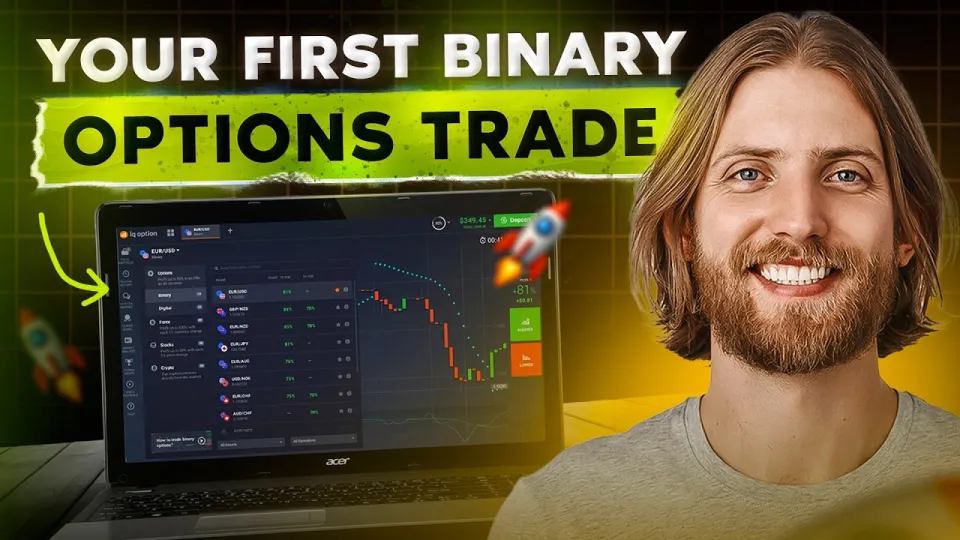
Video: Binary Options | Binary Options Tutorial for Beginners | Where Should You Start?
· based on the channel Binary options tutorial for beginners
Key takeaways
- A binary option is a fixed-risk trade: you stake an amount, pick up or down, and get a fixed payout if you are right or lose the stake if you are wrong.
- Expiry times on the platforms covered range from 5 seconds to several hours, and the payout is typically 60-95% of the stake.
- Three platforms are named as starting points: Quotex, Pocket Option and Binarium.
- A common beginner rule is risking no more than 1-2% of the account balance per trade.
- Binary options are banned for retail traders in the EU, the UK, Israel and Australia, so check your local rules before depositing.
Binary options are fixed-risk trades: you choose an amount, predict whether an asset's price will be higher or lower at the end of a set expiry, and receive a fixed payout if you are right or lose the stake if you are wrong. For a beginner in 2026 the practical starting point is a demo account on a regulated-in-your-jurisdiction platform, one asset, one expiry time and a stake of 1-2% of the balance; the three platforms the breakdown points to are Quotex, where you can register and open a demo account, Pocket Option and Binarium. Nothing about a binary option requires you to own the asset, hold a position overnight or calculate a stop-loss, which is exactly why the format attracts beginners and why it punishes undisciplined sizing.
How a binary options trade actually works
Every binary option has the same four parameters: the asset, the expiry, the stake and the direction. You pick an asset such as EUR/USD, gold or Bitcoin, choose an expiry (from as short as 5 seconds on some platforms up to an hour or more), enter the stake, and press Up (Call) or Down (Put). When the expiry closes, the platform compares the entry price with the exit price. If your direction was correct you get the stake back plus the payout, usually quoted as 60-95% of the stake; if not, the stake is gone. There is no partial exit and no trailing stop in the classic format, so the maximum loss is known before the trade starts. That single fact is the strongest argument for the product and also the reason position size is the whole game: with an 80% payout, one win covers 1.25 losses, so a 50% win rate is roughly break-even before fees and a 55% hit rate is profitable only if stakes stay constant.
Setting up your first account step by step
A structured start beats a fast deposit, and the sequence below is the one that keeps beginners from burning a balance in a week. Work through it in order and do not skip the demo phase.
- Choose a platform and register with an email you control; Quotex, Pocket Option and Binarium all offer a demo mode with virtual funds.
- Complete identity verification before depositing, because withdrawal limits usually apply to unverified accounts.
- Set the chart to a single asset and a single timeframe, for example EUR/USD on 1-minute candles.
- Trade the demo account for at least 100 trades and log each one: asset, expiry, direction, stake, result, and the reason you clicked.
- Define a fixed stake of 1-2% of the planned real balance and a daily loss limit of 5%.
- Make the first real deposit small enough that losing it entirely would not change your month.
Expiry times, payouts and what they cost you
Expiry length is a risk setting, not a style preference. Very short expiries of 5-60 seconds behave close to a coin flip on most brokers' price feeds, because spread and the payout edge dominate any chart reading. One-minute and five-minute expiries leave room for a real technical setup such as a support bounce or a trendline break. Hourly and daily expiries suit traders who follow news and session opens. Payout percentages vary by asset and time of day: majors like EUR/USD often sit near 80%, while crypto and exotic pairs may pay 90%+ but move far more violently. The break-even win rate is simply 100 divided by (100 + payout), so an 80% payout needs 55.6% accuracy and a 70% payout needs 58.8%. Beginners rarely track that number, which is why so many accounts bleed out slowly even when the chart calls look decent.
Typical beginner questions and mistakes
Most doubts from new traders cluster around a handful of themes. The first is whether a strategy is needed at all: without written entry rules, results cannot be measured, and without measurement there is no way to tell skill from luck. The second is martingale-style stake doubling after a loss; it turns a fixed-risk product into an unlimited-risk one and one losing streak of six trades at a 1% base stake already commits over 60% of the account. The third is platform choice: bonuses with turnover requirements can lock a withdrawal for weeks, so read the terms before accepting any deposit bonus. The fourth is time of day, since spreads widen and liquidity thins around rollover and major news releases. The fifth is the legal picture, covered below, which many beginners discover only after depositing.
Regulation and platform access in 2026
Binary options are not available to retail clients everywhere, and this is not a footnote. The European Securities and Markets Authority banned the sale of binary options to retail clients across the EU, and the UK's Financial Conduct Authority, Israel's regulator and ASIC in Australia have taken similar action. Platforms such as Quotex, Pocket Option and Binarium operate under offshore licences and serve many countries, but they are not covered by EU or UK compensation schemes. Before registering, check your local rules, confirm the platform accepts clients from your country, and test a small withdrawal early to verify the payout process. Treat any promise of guaranteed returns as a red flag; the product's fixed payout is a structure, not a guarantee.
All platforms and tools from the breakdown
The video description lists three trading platforms and a VPN tool, reproduced here exactly as published:
- Quotex: https://dakaklik.com/_quotex?creative_id=WzzpYsjS3ps
- Pocket Option: https://dakaklik.com/_PocketOption?creative_id=WzzpYsjS3ps
- Binarium: https://dakaklik.com/_Binarium?creative_id=WzzpYsjS3ps
- NordVPN: https://dakatop.link/Nord_us?creative_id=WzzpYsjS3ps
Summary
Binary options are simple to describe and hard to profit from: fixed payout, fixed expiry, known maximum loss, and an edge that only appears when win rate beats the break-even threshold set by the payout. The realistic beginner path in 2026 is a demo account, one asset, one expiry, stakes of 1-2% and a written log of every trade before any real money moves. The video breakdown on the channel Binary options tutorial for beginners walks through the same starting sequence and is a sensible first watch before you open an account. If you want to start with the platform highlighted in that breakdown, register on Quotex and test the demo mode first, then deposit only what you can afford to lose entirely.
Source: Binary Options | Binary Options Tutorial for Beginners | Where Should You Start? · Markdown version
Questions & answers
How much money do I need to start trading binary options?
Most platforms accept deposits from $10-50, but the meaningful number is the stake size relative to the balance. With a 1-2% rule, a $100 balance means $1-2 per trade, which is enough to learn the mechanics on a demo account and then on live trades without risking the account in a single session.
Are binary options gambling or trading?
The mechanics are closer to a fixed-odds bet than to spot trading, because you never own the asset and the payout is fixed at entry. Traders who treat it as trading use chart analysis, a written strategy and strict position sizing; those who treat it as gambling stake large amounts on short expiries and lose the balance quickly.
Which expiry time is best for a beginner?
One-minute to five-minute expiries give enough time for a real technical setup to play out while keeping the result immediate. Expiries of a few seconds are dominated by spread and payout edge, and hourly or daily expiries require patience and news awareness that most beginners do not have yet.
Can I withdraw profits from these platforms?
Withdrawals depend on the platform's terms: verification, minimum withdrawal amounts and any bonus turnover requirements. Test a small withdrawal early, before building a large balance, and keep the identity documents consistent with the account name to avoid a frozen payout.